
The Ancient Egyptian Color Palette
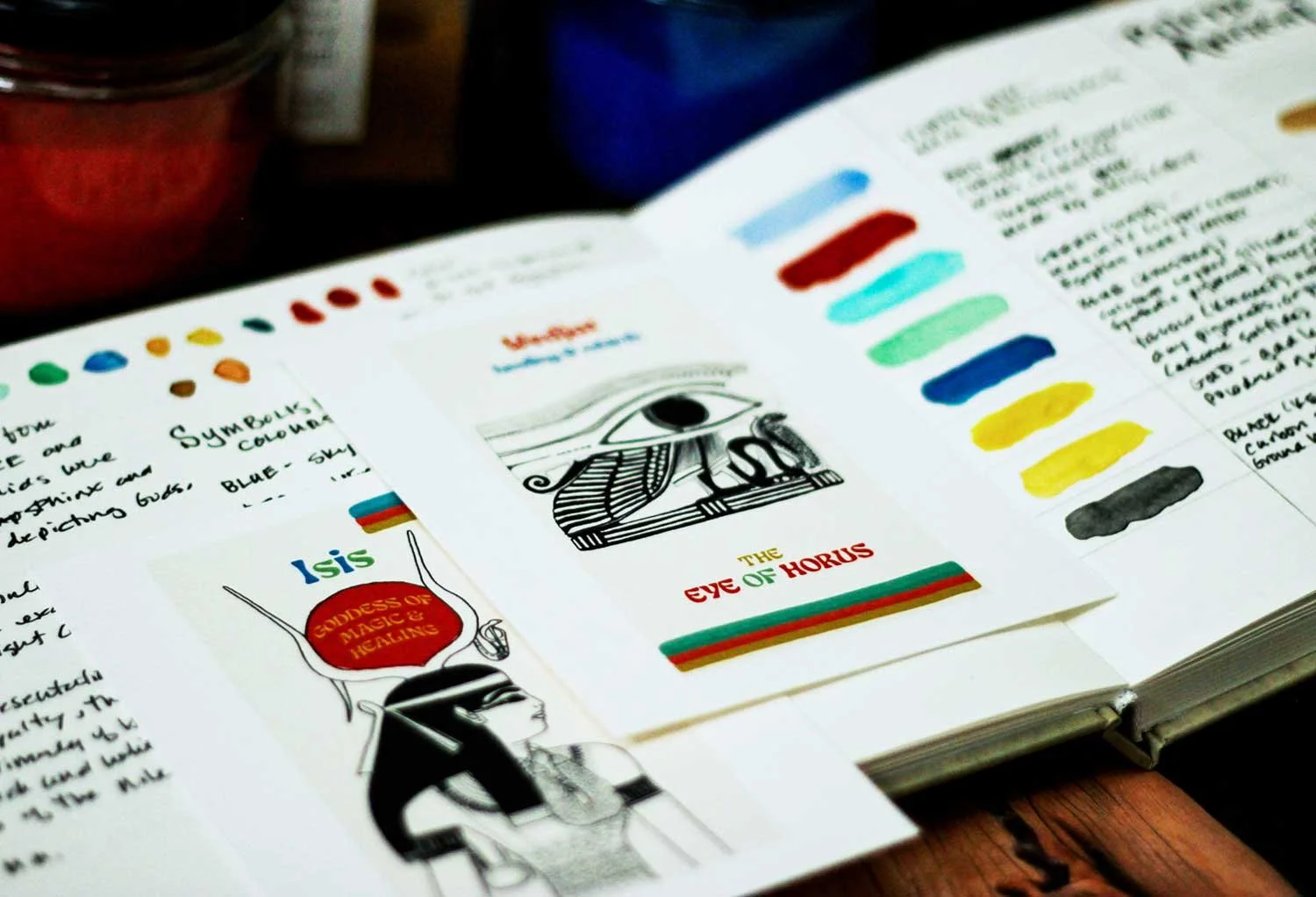
From my journal, Egyptian color palette and notes.
The Color Palette of Ancient Egypt: Pigments, Symbolism, and Timeless Inspiration
I’ve been in love with Ancient Egypt since I can’t even remember when. I think it was before the King Tut exhibit came to the Met Museum in 1978, but perhaps that was the starting point.
It’s more than just a love of history. With Ancient Egypt, it’s a fascination with the pyramids, colossal statues, mysterious hieroglyphs and the whole romance of adventure stories surrounding archaeology and lost artifacts.
Color is just one part of the equation, but tomb wall paintings and the symbolism color plays in the life and death of the Ancient Egyptians is always intriguing.
And of course, it’s repeated over time. When Howard Carter discovered Tut’s tomb in 1922, Egyptomania in all its glory captured the world’s attention again. Everything from playing cards to cosmetic cases were designed with Egyptian motifs. And how many buildings from that era have you seen with Egyptian columns adorned with stylized papayrus for capitals? Very common in dramatic spaces such as theatres etc.
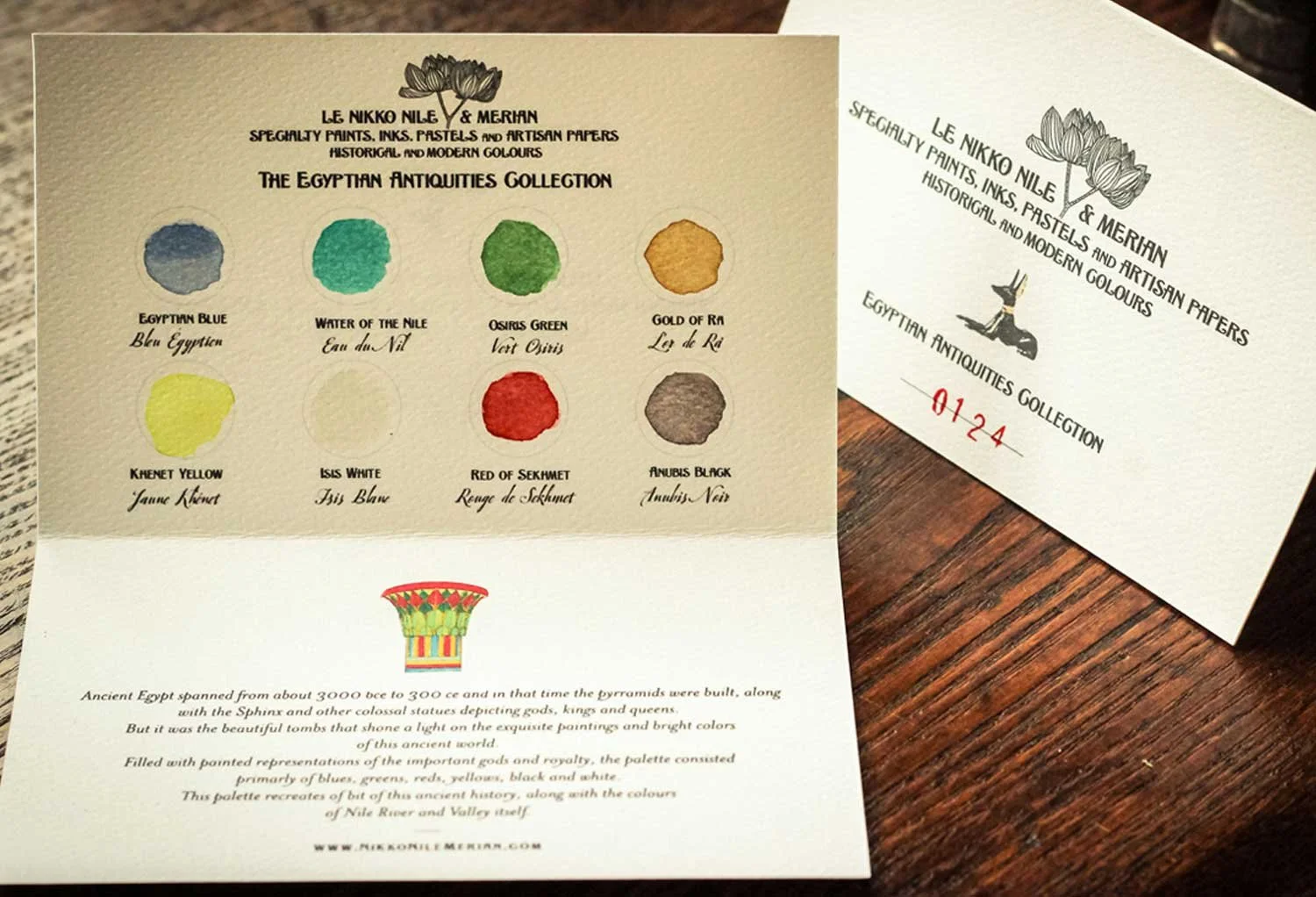
From a project on fantasy 1920s Egyptian ephemera I did a few years ago.
Color, Not Just for Decoration
Unlike many modern color palettes chosen purely for decoration, Egyptian colors were deeply symbolic. Every hue carried religious, spiritual, or practical meaning, and artists followed traditions that remained remarkably consistent throughout the Old, Middle, and New Kingdoms. Their palette was relatively limited compared with today's thousands of manufactured paints, yet it produced some of history's most recognizable works of art.
Whether decorating the walls of a temple, illustrating a papyrus scroll, or painting a finely carved wooden coffin, Egyptian artists selected their colors with great care.
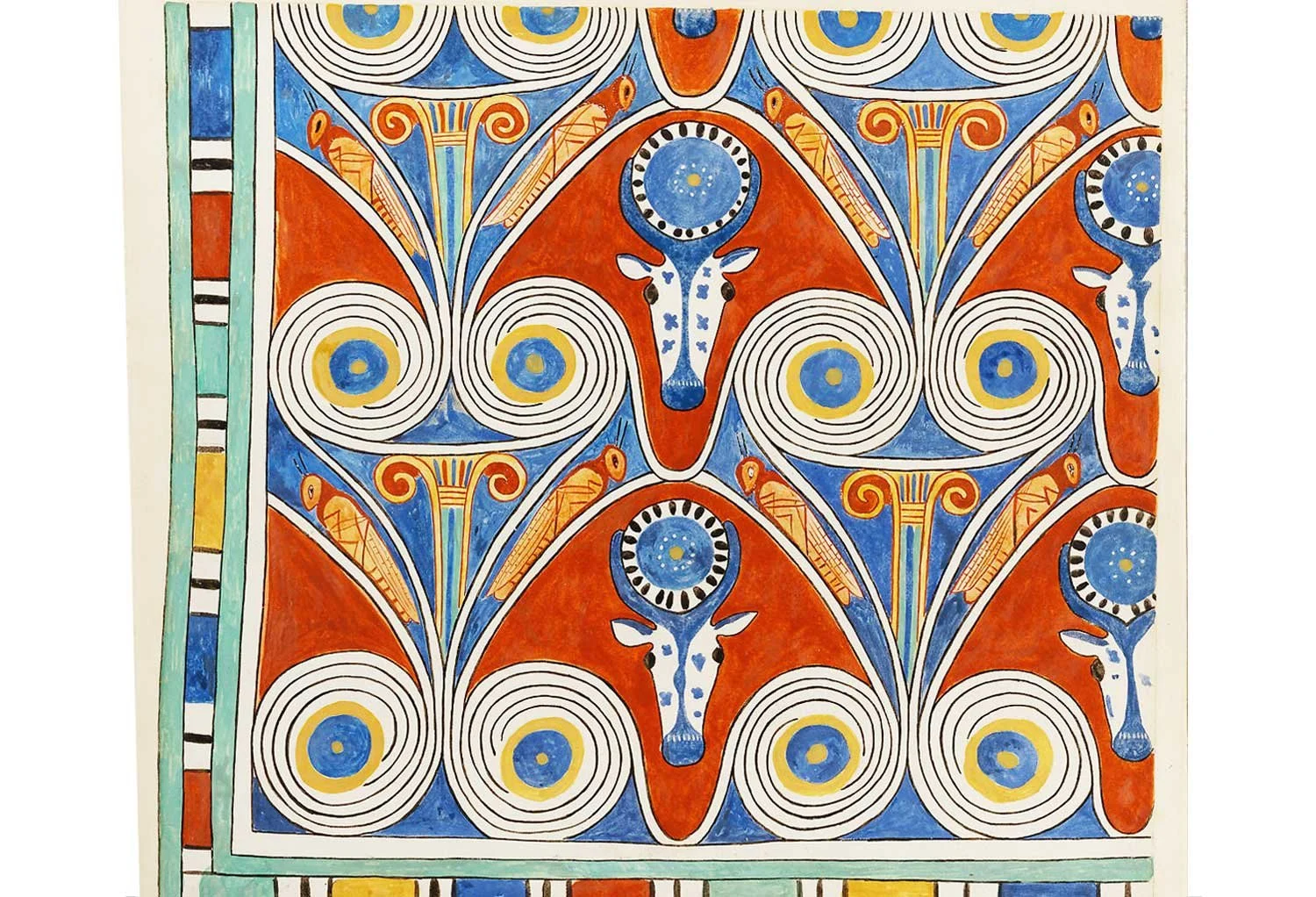
A ceiling fragment from the tomb of Neferhotep. The original was painted during the New Kingdom (about 1290 BC), this was a copy done in tempera by Charles K. Wilkinson for the Metropolitan Museum in 1924.
Wilkinson was part of the graphics department sent by the museum to study and provide images for the Met at excavations in Egypt in the 1920s. Later he became the curator for Near Eastern art.
As a side note: This would make a beautiful Hermès scarf!
Color as Symbol
To the Egyptians, color was known as iwen, a word that referred not simply to appearance but to the essential nature or character of a thing. Applying color to an object was believed to complete it, giving it both beauty and meaning.
Artists rarely chose colors simply because they looked attractive together. Instead, colors communicated ideas about life, death, divinity, fertility, power, protection, and eternity.
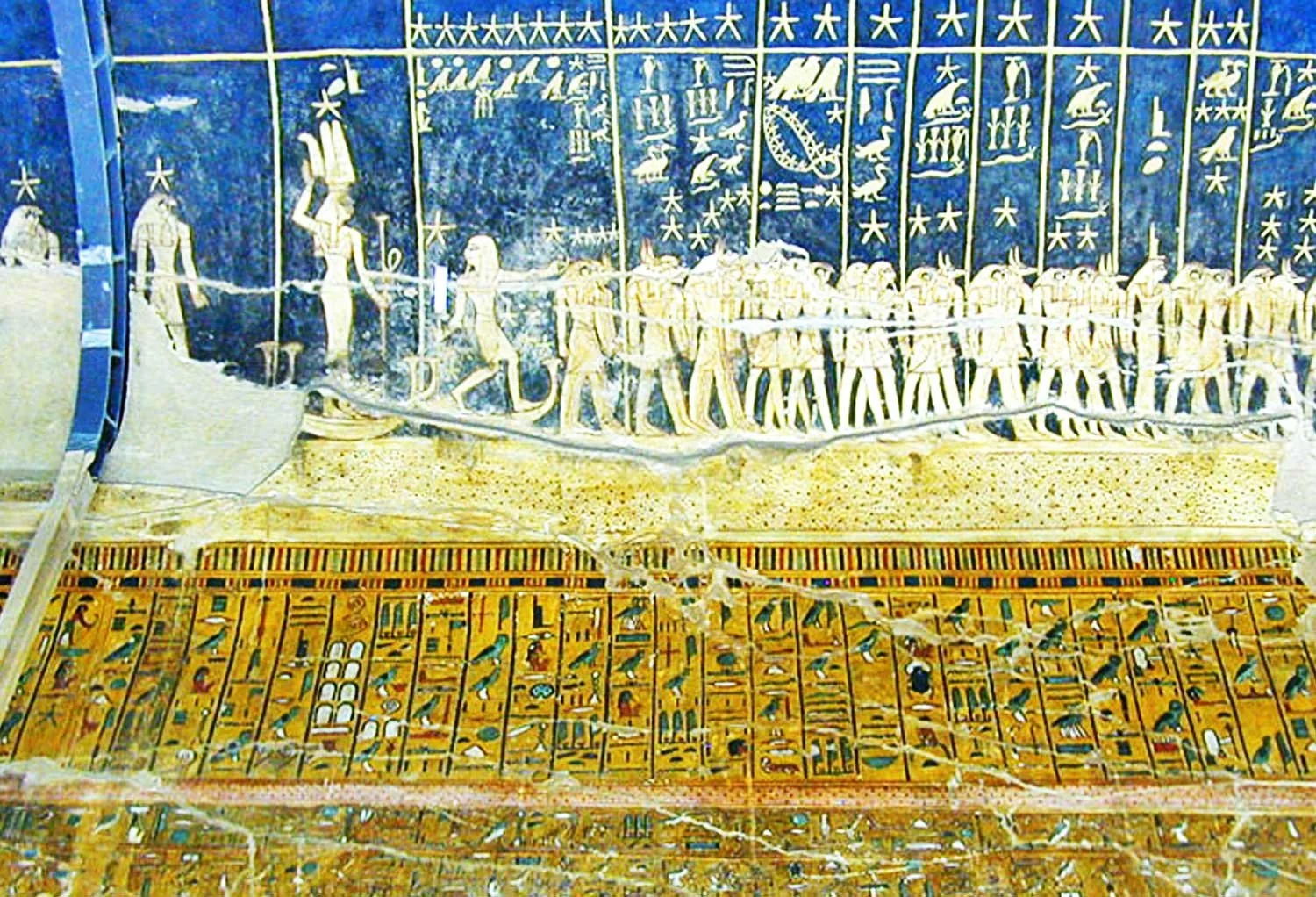
Details from the tomb ceiling of Seti I (KV17), discovered by Giovanni Belzoni on October 16, 1817.
Egyptian Blue - The Color of Heaven and Creation
This is probably the color that is more closely associated with Ancient Egypt.
Known today as Egyptian Blue, it was the world's first synthetic pigment, developed around 2600 BC. Rather than relying solely on naturally occurring minerals, Egyptian craftsmen learned to manufacture the pigment by heating together:
silica (sand)
copper compounds
limestone
natron or plant ash as a flux
The resulting blue glass-like material was then crushed into a fine pigment.
Meaning
Blue represented:
the heavens
the Nile River
creation
rebirth
divine protection
truth
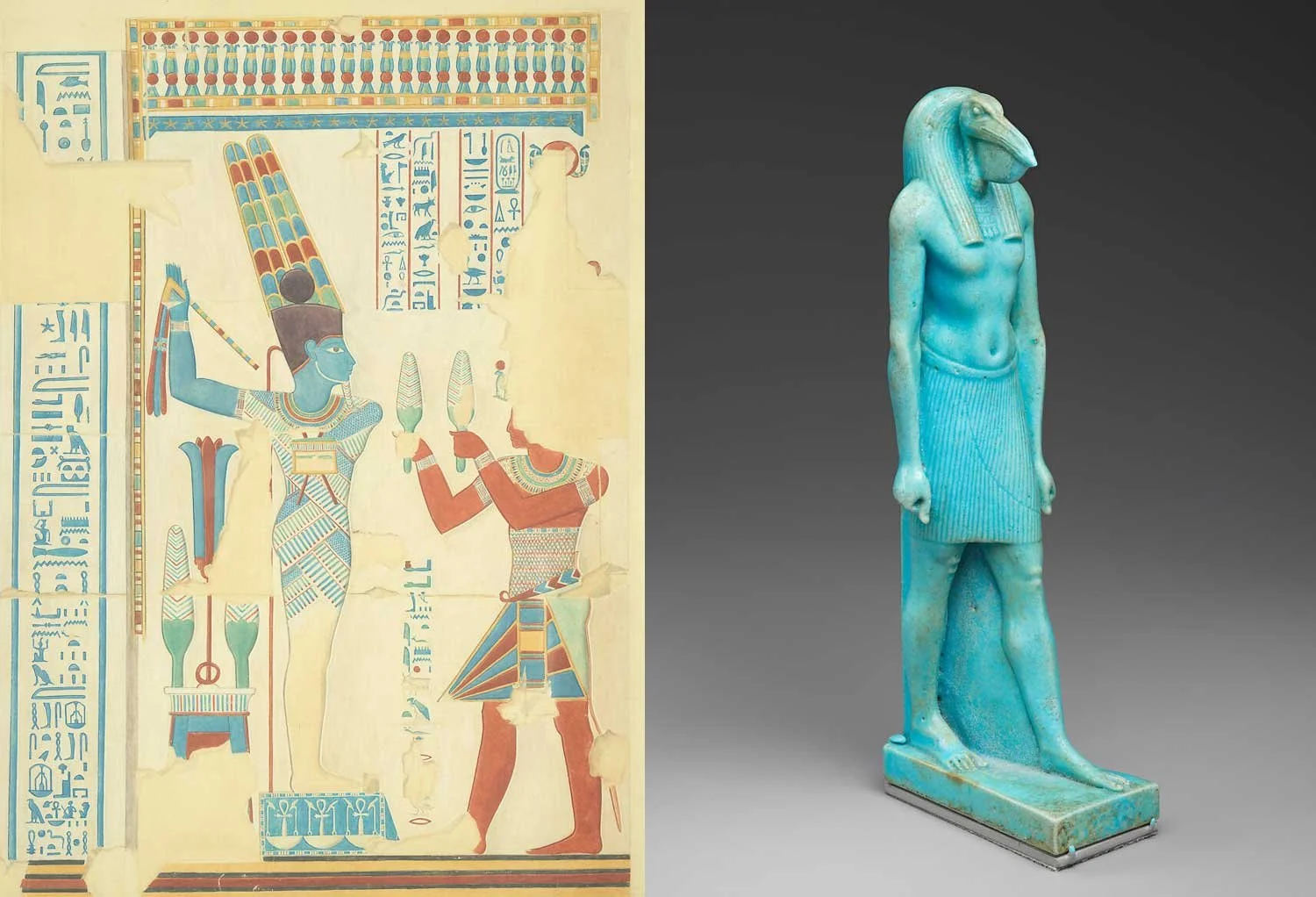
Temple of Amun at Hibis by Charles K Wilkinson, Striding Thoth - Ptolemaic Period (332–30 BCE) both at the Met Museum, NYC. The the Thoth statue is faience, but the coloring is symbolically blue.
Many gods, including Amun and Thoth, were associated with blue, while ceilings of temples were often painted deep blue and decorated with golden stars to represent the night sky.
Today, conservators still marvel at how brilliantly Egyptian Blue has survived after thousands of years.
Of course, Lapis Lazuli was another blue that was prevalent in Ancient Egypt. But its cost was much greater and it was reserved for very special jewelry and cosmetic etc. It was from Afghanistan and because it was so expensive, there was a need for an alternative. That alternative was Egyptian Blue.
The Egyptians used the term hsbd-iryt for their new blue, it translates to artificial lapis lazuli.
Green - Life, Renewal, and Fertility
Green symbolized everything associated with life.
It represented:
vegetation
new growth
health
resurrection
eternal youth
The god Osiris, ruler of the afterlife, was often shown with green skin, emphasizing his role as a deity of regeneration and rebirth.
Pigments
Green pigments were produced from:
finely ground malachite
mixtures of blue and yellow pigments
manufactured copper-based greens
Malachite was especially valued because of its rich, vibrant color and was also ground into cosmetics for eye paint.
Red – Energy, Power, and the Desert
Red possessed one of the most complex meanings in Egyptian art.
On one hand, it represented:
life
vitality
strength
courage
masculine energy
Healthy, strong men were frequently painted with reddish-brown skin to reflect their lives spent working outdoors.
Yet red also carried more dangerous associations.
It symbolized:
fire
chaos
destruction
the scorching desert
the god Seth
The barren desert area was known as the "Red Land," standing in contrast to the fertile "Black Land" along the Nile.
Pigments
Red pigments were commonly made from:
red ochre (iron oxide)
hematite-rich earths
These minerals were widely available and produced colors ranging from warm terracotta to deep rust.
Yellow – Sunlight and Eternity
Yellow represented the eternal nature of the gods.
Because the sun shines endlessly, yellow became associated with:
immortality
divine flesh
eternal life
the sun god Ra
Women were sometimes depicted with lighter yellow-toned skin than men, following artistic conventions rather than realistic portraiture.
Pigments
Artists produced yellow using:
yellow ochre
orpiment (arsenic sulfide)
Orpiment created a particularly brilliant golden-yellow, though it was highly toxic.
Gold – The Flesh of the Gods
Gold was not merely a color—it was considered sacred.
Because it never tarnishes, gold symbolized:
immortality
perfection
divine power
eternal light
The Egyptians believed the flesh of the gods was made of gold, making the precious metal especially appropriate for royal burials and temple treasures. It also symbolized the deceased moving towards immortality.
Gold leaf adorned:
sarcophagi
statues
jewelry
ceremonial furniture
funerary masks
The famous mask of Tutankhamun remains one of history's finest examples of Egyptian goldsmithing.
White – Purity and Sacredness
White represented:
purity
cleanliness
holiness
simplicity
sacred ritual
Priests commonly wore white linen garments during religious ceremonies.
Pigments
White pigments came from:
gypsum
chalk
finely ground limestone
These materials created bright, opaque paints suitable for walls, relief carvings, and ceramics.
Black – Fertility and Rebirth
Unlike many modern Western associations with mourning, black often had positive meanings in Egypt.
It represented:
fertile soil
regeneration
resurrection
the afterlife
stability
Each year the Nile deposited rich black silt across its floodplain, renewing the land and making agriculture possible. Egypt itself was known as Kemet, often translated as "The Black Land."
Osiris also appeared with black skin in many artistic depictions, emphasizing rebirth after death.
Pigments
Black paints were created using:
charcoal
soot
burnt animal bones
These pigments produced strong, durable blacks ideal for outlines and inscriptions.
Decorative Arts and Daily Life
Egyptian colors appeared everywhere—not only in monumental temples but also throughout everyday life.
Artisans painted:
wooden furniture
coffers and chests
ceremonial boats
carved statues
household shrines
papyrus manuscripts
jewelry
pottery
cosmetics containers
Even objects carved from stone were usually painted in brilliant colors, reminding us that the pale statues displayed in museums today originally appeared vibrant and richly decorated.
The Artist's Palette
An Egyptian painter's palette was surprisingly practical and portable.
Pigments were stored as dry powders and mixed with water and natural binders, likely including plant gums or animal glues, shortly before use. Artists often carried wooden palettes with shallow depressions for each color and painted using brushes made from reeds whose ends had been frayed into soft fibers.
The careful layering of pigments, combined with clear outlines drawn in black or red, created the crisp, recognizable style that has become synonymous with Egyptian art.
An Enduring Palette
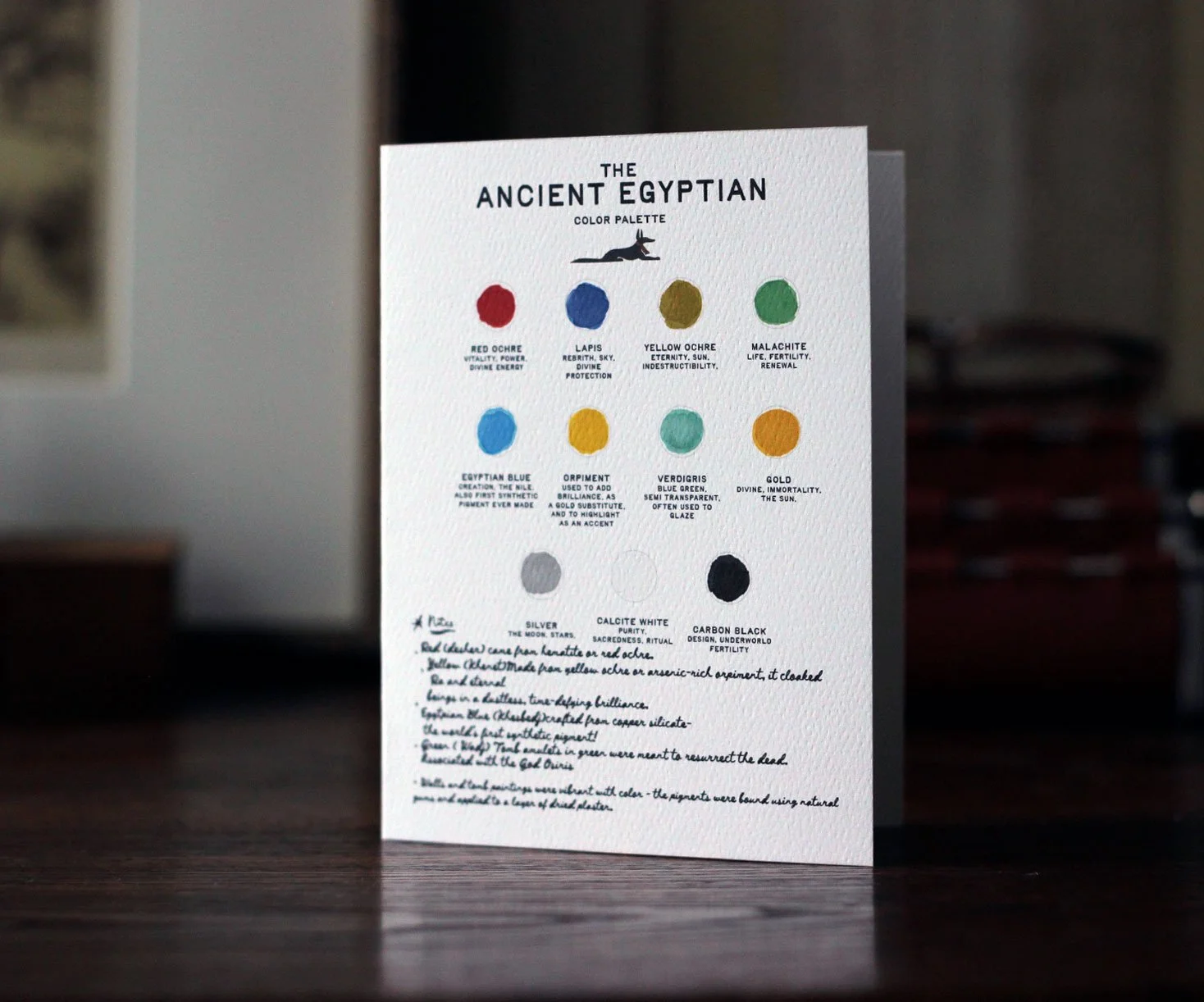
A palette from one of my card designs.
The colors of Ancient Egypt were never chosen by chance or just because the color was appealing. Each selected pigment reflected the characteristics of the natural world that the artist wanted convey along with the spiritual beliefs that shaped Egyptian civilization.
From the manufactured brilliance of Egyptian Blue to the fertile symbolism of black Nile silt, these colors told stories of creation, kingship, life, death, and eternity. Their remarkable permanence has allowed us to glimpse the world as Egyptian artists intended—one in which color was not merely decoration, but an essential language of meaning.
Thousands of years later, these same hues continue to inspire artists, designers, architects, and historians alik
If you enjoyed this post, you might also like my post on Egypt and Egyptology Fonts.